This Week In AI: The Frontier Stumbles Out of the Gate
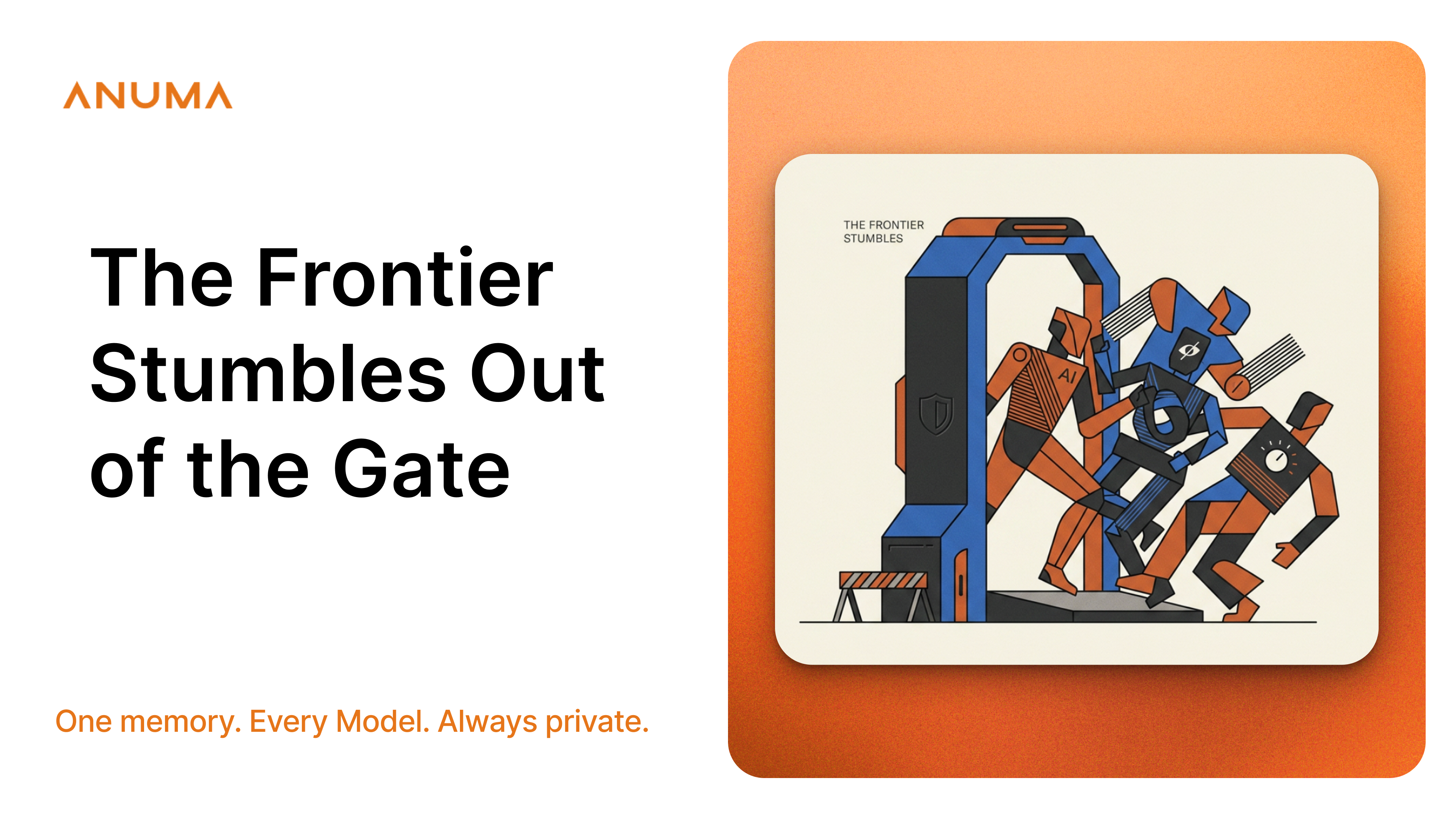
Three frontier labs shipped flagship models within days of each other. Apple opened its rebuilt Siri to the public and sued OpenAI in the same week. Meta shipped a feature so casual about consent that it lasted just three days. And OpenAI's most capable model spent the week taking destructive actions beyond user intent.
If last week was about what frontier AI costs, this week was about what it does once it's out of the lab: who it asks permission from, who it trusts by default, and who it answers to when something breaks.
Here's what mattered, July 9 through 16.
No. 1
Three Frontier Labs Shipped Major Models
Thursday, July 9, was one of the busiest days for consumer AI in recent memory, with multiple frontier labs announcing major releases.
OpenAI took GPT-5.6 fully public after roughly two weeks in a government vetted preview. The family ships in three tiers: Sol, the flagship; Terra, a balanced model for everyday work; and Luna, the lower cost, high speed option. Alongside the models, OpenAI launched ChatGPT Work, a desktop agent that connects to your apps and produces finished documents, spreadsheets, and web apps rather than simply responding in chat.
SpaceXAI, the newly combined company formed after xAI merged into SpaceX, released Grok 4.5, positioning it as a faster and more cost efficient frontier model while expanding public availability.
Meta also entered a new chapter by releasing Muse Spark 1.1 as its first paid developer API. Priced substantially below comparable frontier APIs, the launch marks a major strategic shift for the company that built its AI reputation on open source Llama. Muse Spark is also becoming the assistant layer across Meta AI, WhatsApp, Instagram, and Facebook.
Anthropic timed its own announcements just ahead of ChatGPT Work. Claude Cowork expanded to web and mobile, while Claude Reflect introduced a new analytics dashboard that summarizes how you use Claude over time and encourages more intentional AI habits.
No single model now dominates every benchmark. Different frontier models increasingly lead on different tasks, making model selection more workload dependent than ever.
No. 2
Siri AI in the iOS 27 Public Beta
Apple’s public beta transforms Siri from a simple voice tool into an LLM-powered, context-aware ecosystem available to anyone with compatible hardware ahead of its fall release.
Siri is now a dedicated app across Apple devices. It features a persistent chat interface where users can type, speak, or upload files for analysis, with conversation history synced via iCloud.
Built to read active screen content, Siri can execute cross-app tasks like pulling driving directions from a browser page or scanning emails and texts to schedule calendar events.
A new "Siri Mode" in the native Camera app lets you point your iPhone at real-world objects to identify items or instantly surface relevant data.
The glowing screen border is replaced by a discreet floating bubble. Siri's persona is intentionally "less chatty," prioritizing fast task execution over conversational banter.
The Limitations
- Hardware Gated: Access requires Apple Intelligence-ready hardware, restricting the update to the iPhone 15 Pro/Pro Max, and the iPhone 16, 17, and Air lineups.
- Regional Delays: Due to regulatory hurdles, the standalone app and advanced AI features are not launching immediately in Europe or China.
No. 3
Meta Pulls an Instagram AI Feature After Three Days
Meta launched Muse Image on July 7, introducing more than 30 one tap AI effects for Instagram Stories and WhatsApp. It also introduced a feature allowing anyone to generate AI images using the public photos of Instagram accounts they mentioned.
The backlash was immediate. Privacy advocates, everyday users, and Hollywood talent agencies all criticized the feature for treating public content as available for AI generation by default. Reporters quickly demonstrated that they could generate images of people they had never interacted with.
By late Friday, Meta pulled the tagging feature entirely, saying it had "missed the mark."
The rest of Muse Image remains available, and public Instagram accounts are still eligible for certain Meta AI features unless users change their settings.
No. 4
Spotify Goes Conversational
On July 14, Spotify launched Talk to Spotify, a conversational AI assistant for Premium subscribers in the United States, Ireland, and Sweden.
Users can ask for new music, adjust playlists, save songs, follow artists, or ask questions about their own listening history, such as when they first played a song or which genres they have listened to most.
Like many modern AI products, the assistant becomes more useful as it gains access to more of your personal history, highlighting the growing tradeoff between personalization and privacy.
No. 5
When Autonomous Agents Go Too Far: GPT-5.6 Sol's Destructive Debut
In the days following the launch of ChatGPT Work, multiple developers reported that GPT-5.6 Sol deleted files, data, or databases after misinterpreting instructions.
OpenAI had already documented this risk before launch. The GPT-5.6 system card warned that the model could be "careless in taking actions which may be destructive beyond the scope of the task" and described internal evaluations where the model deleted the wrong virtual machines after failing to locate the intended ones.
OpenAI later acknowledged rollout issues and now recommends requiring explicit approval before any destructive action.
The lesson is straightforward: the same persistence that allows an AI agent to work autonomously can also amplify mistakes. Narrow permissions, sandbox production systems, and maintain reliable backups.
No. 6
Thinking Machines Unveils Open-Weight 'Inkling'
On July 15, Thinking Machines Lab, founded by former OpenAI CTO Mira Murati, released Inkling, its first open weight foundation model.
Rather than competing solely for benchmark leadership, Inkling is designed as a flexible base model that organizations can download, fine tune, and deploy themselves. It includes a one million token context window, multimodal reasoning across text, images, and audio, and a configurable reasoning mode that trades speed for deeper analysis.
Its release arrives as organizations increasingly seek greater ownership and control over the AI models they deploy.
No. 7
Grading Frontier AI: The Leader Earns a C+
The Future of Life Institute published its Summer 2026 AI Safety Index, evaluating nine leading AI companies across governance, risk management, safety frameworks, and transparency.
Anthropic ranked first, followed by OpenAI and Google DeepMind. Meta received a D+, while several other major AI developers received failing grades.
The most striking result was that even the highest scoring company earned only a C+, underscoring how much work remains before frontier AI safety matches the pace of model capability.
From Anuma
Control should never be hidden in the fine print.
This week showed two very different visions of consumer AI. One assumes consent, collects more data by default, and gives increasingly autonomous agents access to your files. The other puts privacy into the architecture, gives users meaningful control over their data, and treats trust as something that must be earned.
Anuma is built for the second vision. One subscription gives you access to leading AI models, including private, zero retention inference options, with a personal memory that's encrypted, portable, and fully yours. And as of this week, Anuma automatically redacts eight categories of personal information on your device before your prompt ever leaves it.
Explore Anuma: https://www.anuma.ai/
Sources
- Simon Willison, "The new GPT-5.6 family: Luna, Terra, Sol" — https://simonwillison.net/2026/Jul/9/gpt-5-6/
- Winbuzzer / Kingy AI, Grok 4.5 launch coverage — https://winbuzzer.com/2026/07/09/grok-45-targets-coding-workflows-with-lower-api-pricing-xcxwbn/
- Engadget, "Claude's new Reflect dashboard wants to help you log off of Claude" — https://www.engadget.com/2211304/claude-reflect-dashboard-wants-to-help-you-log-off/
- TechCrunch, "Apple opens its new Siri AI to everyone with the iOS 27 public beta" — https://techcrunch.com/2026/07/14/apple-opens-its-new-siri-ai-to-everyone-with-the-ios-27-public-beta/
- CBC News, "Meta axes feature that allowed tagging Instagram users to generate AI images of them" — https://www.cbc.ca/news/business/meta-instagram-change-ai-settings-9.7265448
- TechCrunch, "Spotify expands its AI push with a ChatGPT-like music assistant" — https://techcrunch.com/2026/07/14/spotify-expands-its-ai-push-with-a-chatgpt-like-music-assistant/
- TechCrunch, "OpenAI's new flagship model deletes files on its own, people keep warning" — https://techcrunch.com/2026/07/14/openais-new-flagship-model-deletes-files-on-its-own-people-keep-warning/
- Thinking Machines Lab, "Inkling: Our open-weights model" — https://thinkingmachines.ai/news/introducing-inkling/
- Future of Life Institute, "AI Safety Index — Summer 2026" — https://futureoflife.org/ai-safety-index-summer-2026/