The New AI Power Shift: Government, Big Tech, and the Battle for Access
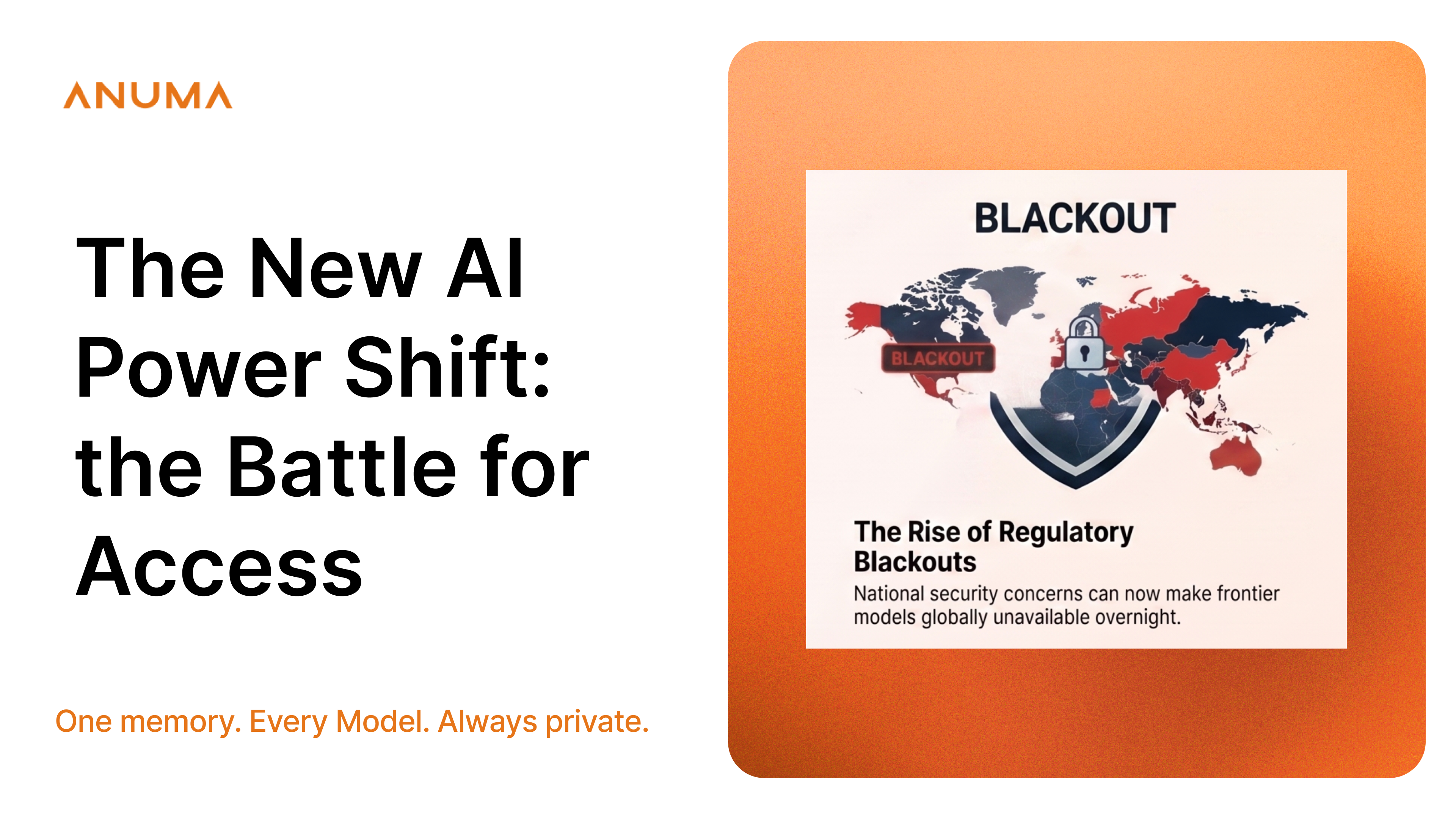
Earlier this month, we wrote about what appeared to be the most capable AI model ever released to the public. Three days after that model launched, the US government had it switched off.
Not because of a technical failure. Not because the company changed its mind. The model was taken offline after a US government export control directive, making it unavailable to users worldwide.
That story captures a much bigger shift happening across the AI industry.
The future of AI isn't determined only by who builds the smartest model. It's increasingly shaped by who controls access, distribution, and the products people use every day.
Here are the four consumer AI stories that mattered most since June 10.
A frontier model pulled by government order. A new most-capable model from Google. Claude arriving inside Microsoft Office. And a $60 billion deal reshaping who owns the tools developers use every day.
No. 1
The US government pulls Claude Fable 5 from the market
Three days after launch, Anthropic suspended public access to Claude Fable 5 and Claude Mythos 5 following a US export control directive.
According to Anthropic, the order restricted access by foreign nationals, including visa holders, permanent residents, and even some of the company's own employees. Because those restrictions couldn't be enforced reliably at the API level, Anthropic temporarily disabled the models for everyone while working with regulators on a longer-term solution.
US officials cited national security concerns involving advanced cybersecurity capabilities. Anthropic has publicly disagreed with aspects of that assessment but complied with the directive.
As of publication, both models remain unavailable. Anthropic has indicated they are expected to return, although no official restoration date has been announced.
Whether the interruption lasts days or weeks, the precedent is significant.
This is one of the first instances where a frontier consumer AI model became unavailable because of government policy rather than technical limitations or a company decision.
For consumers and businesses alike, it's a reminder that relying on a single AI provider carries new kinds of risk.
No. 2
ChatGPT Falls Below Half the AI Assistant Audience for the First Time
On June 16, Sensor Tower published its State of AI 2026 report, and one statistic stood out: ChatGPT's global True Audience share fell to 46.4% by the end of May, the first time it has dropped below 50% since launch.
ChatGPT isn't shrinking. It remains the world's largest AI assistant with more than 1.1 billion monthly active users, becoming the fastest app ever to reach that milestone. The rest of the market is simply growing faster. Google Gemini now accounts for 27.7% of the AI assistant audience, driven by deep integration across Android and Google Workspace, while Claude has reached 10.3% and emerged as the fastest-growing major assistant, with its U.S. audience share climbing from 4.4% to nearly 14% over the past year.
Sensor Tower also found that users are increasingly willing to move between AI assistants based on capabilities, ecosystem integration, pricing, and brand trust. Claude stands out for another reason: it has the highest paid conversion rate among the major assistants, with about 13% of users subscribing.
The broader trend is clear: the AI assistant market is becoming increasingly multi-model. Reaching users through a single assistant no longer means reaching most of the market, making interoperability and model choice more valuable than ever.
No. 3
Claude lands inside Microsoft Office
On June 16, Microsoft made Anthropic's Claude broadly available as a selectable model inside Microsoft 365 Copilot, across web, desktop, and mobile. Hundreds of millions of Office users can now choose Claude for complex analysis, long-document understanding, and structured writing, alongside the existing OpenAI models.
It is a small menu change with a big signal behind it. Microsoft, long tied to OpenAI, now offers users a choice of model inside the tools they already use for work. The same week, Microsoft's new Copilot Cowork agent reached general availability, built on Anthropic technology.
"The era of one default model is over. The tools that let you switch freely are the ones that last."
The lesson is consistent across the industry. Multi-model is becoming the default expectation, not a premium feature. Even the largest platforms are building model choice directly into their products.
No. 4
A $60 billion deal reshapes AI coding
The AI industry also saw one of its biggest acquisitions to date.
Following SpaceX's blockbuster public offering, the company announced plans to acquire AI coding platform Cursor in an all-stock transaction valued at approximately $60 billion.
Cursor has become one of the most widely adopted AI coding tools, with billions of dollars in annualized revenue and a deeply embedded position in developers' daily workflows.
The acquisition highlights a broader shift happening across AI.
Building powerful models is no longer enough. Companies increasingly compete to own the interfaces where people spend their time, coding environments, productivity software, browsers, search engines, and operating systems.
Distribution has become one of AI's most valuable assets.
As consolidation accelerates, users may find it increasingly difficult to switch providers or move their data between platforms.
From Anuma
Models come and go. Your workspace should stay.
At first glance, these announcements seem unrelated. One involves government policy. Another is a model release. A third is an enterprise software update. The fourth is a massive acquisition.
Together, however, they point toward the same conclusion. Consumer AI is entering a new phase where access matters as much as capability.
The best model today may not be the best model next month. A service you depend on could become unavailable because of regulation, pricing changes, regional restrictions, or business decisions.
And the applications you use every day increasingly determine which AI models you can access, not the other way around.
AI models will continue to improve. New leaders will emerge. Policies will change. Companies will merge.
The constant shouldn't be the model you happen to use today. It should be your own workspace, your conversations, your files, and your memory.
That's the philosophy behind Anuma.
Instead of locking users into a single provider, Anuma brings together leading AI models, including ChatGPT, Claude, Gemini, Grok, DeepSeek, Kimi, and others inside one workspace. Your context and memory stay with you across models, making it easy to switch as the AI landscape evolves. For privacy-sensitive workflows, users can also run supported open source models with zero data retention.
As the past two weeks have shown, the AI landscape can change overnight.
Your work shouldn't have to.
Sources
- TechCrunch: SpaceX to acquire Cursor for $60B in stock, days after blockbuster IPO
- CNBC: SpaceX Cursor acquisition
- https://techcrunch.com/2026/06/16/chatgpts-market-share-slips-below-50-for-first-time/
- Anthropic: Statement on Fable 5 and Mythos 5 access
- Microsoft Learn: Release notes for Microsoft 365 Copilot
- Microsoft 365 Blog: Copilot Cowork is now generally available
- BuildFastWithAI: AI News Today, June 22, 2026
- https://sensortower.com/blog/state-of-ai-2026