The Week AI Started Doing Things Beyond the Chat Window
If it feels like AI is starting to do more than just answer questions, you're not imagining it.
This week marked another step toward AI becoming something that takes action instead of simply generating responses. Google Search began interacting with third party apps. The European Union ordered Google to give competing AI assistants deeper access to Android. Retailers brought AI assistants closer to the checkout experience. Meanwhile, lower cost AI models continued narrowing the performance gap with the industry's biggest players, while OpenAI introduced new safeguards for younger users.
Rather than one company winning the latest benchmark, this week's biggest story was a broader shift: AI is becoming an operating layer that helps people get things done. At the same time, governments, technology companies, and consumers are beginning to ask an important question: who controls that layer?
Here are the six consumer AI stories that mattered most this week.
No. 1
Google Search Starts Working Across Other Apps
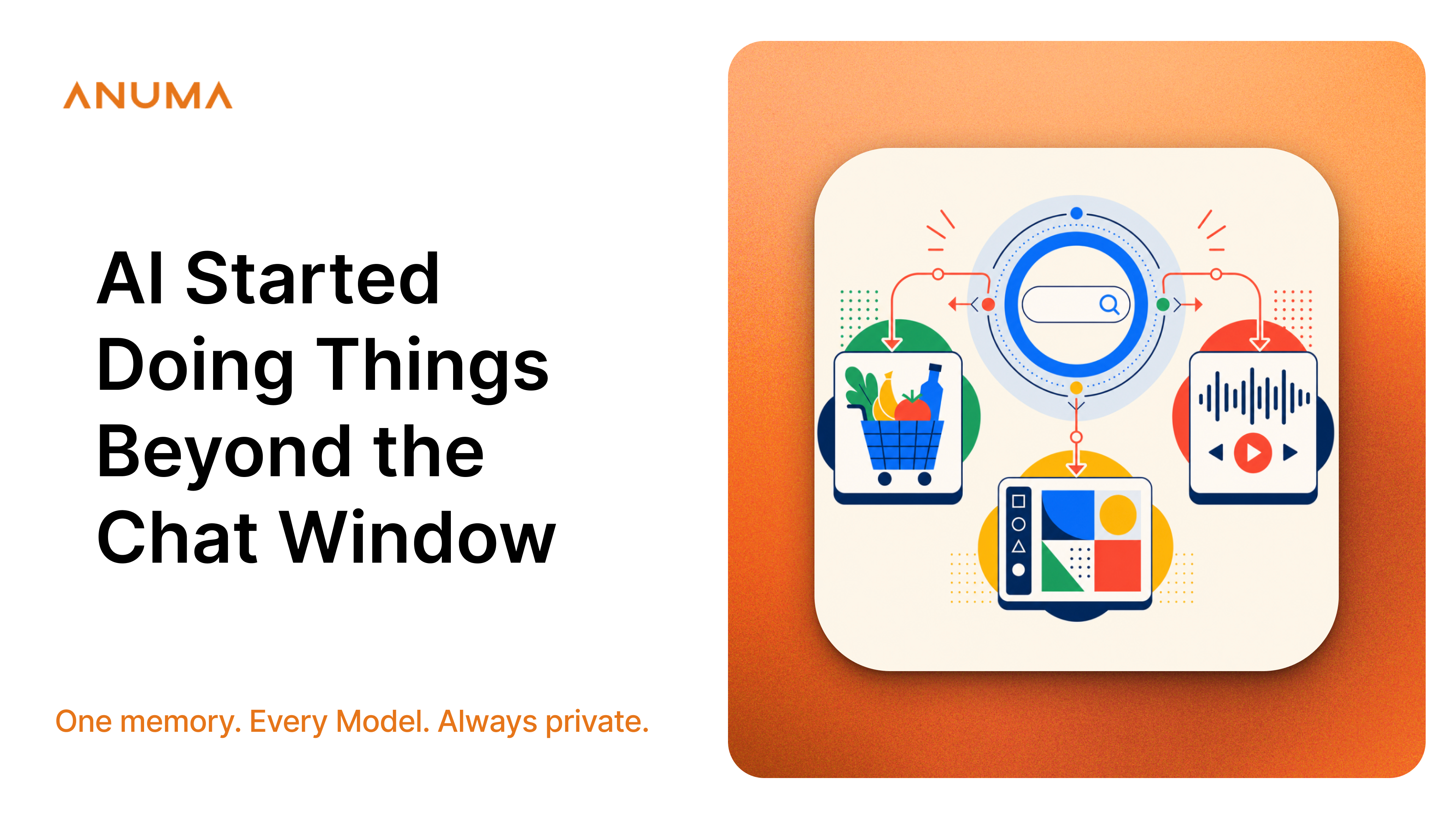
Google expanded AI Mode in Search with connections to selected third party services in the United States, including Instacart, Canva, and YouTube Music.
Instead of simply returning links, eligible users can now ask Search to perform tasks such as building a grocery cart, creating a Canva design, or generating a playlist without leaving the Search experience.
This represents a meaningful change in how people interact with Search. For decades, Google helped users find destinations across the web. Increasingly, Search is becoming the destination itself by understanding what you want, selecting the appropriate service, and beginning the task for you.
For consumers, that means fewer steps and less switching between apps.
For developers, publishers, and businesses, it raises a more difficult question: Is Google still primarily sending traffic to services, or is it becoming the layer where transactions begin?
The real measure of success won't be the number of integrations Google announces. It will be how much useful work those integrations can actually complete. Suggesting a Canva template is helpful. Producing a finished design that follows your brand guidelines and remains fully editable is far more valuable.
No. 2
Europe Opens Android to Rival AI Assistants
On July 16, the European Commission adopted two binding decisions under the Digital Markets Act requiring Google to provide competing AI assistants with the same system level Android access currently available to Gemini.
The decision also requires Google to share certain anonymized Search data with competing search engines and AI chatbots.
When implemented, qualified rival assistants will be able to register their own wake words, respond to system buttons, understand on screen context, and take actions across apps. Most of these Android changes are scheduled to arrive by August 2027, while Search data sharing begins in January 2027.
Google has argued that these requirements could weaken the privacy and security protections built into its own ecosystem and is expected to appeal. However, under the Digital Markets Act, an appeal does not delay compliance.
This story mirrors Google's Search expansion from a different angle.
As AI assistants become the interface people use every day, deciding which assistant gets privileged access is no longer just a product decision. It is becoming a regulatory issue.
The contrast became even clearer this week when Apple confirmed it is delaying the rollout of its redesigned Siri AI features in the European Union rather than comply with the DMA's interoperability requirements. It highlights the growing tension between openness, competition, and platform control.
No. 3
Kimi K3 Raises the Pressure on Premium AI Models
Moonshot AI introduced Kimi K3 in mid July, positioning it as an open model focused on coding and agentic workflows.
According to published specifications, Kimi K3 uses a sparse mixture of experts architecture with roughly 2.8 trillion total parameters, supports up to a one million token context window, and handles text, images, and video. The model also briefly reached the top of a widely watched frontend coding leaderboard. Moonshot says open weights will be released on July 27.
For most consumers, the significance isn't whether they will run Kimi locally. It's what models like Kimi mean for the industry.
Powerful open and open weight models create competitive pressure across the market. They reduce costs for developers, make private deployments more practical, and encourage commercial AI providers to continue improving performance while lowering prices.
There are important caveats. Promising open weights is not the same as releasing them, and a model of this size still requires substantial computing infrastructure. Open models reduce licensing barriers, but they do not eliminate hardware costs.
The launch also quickly became geopolitical.
On July 23, Michael Kratsios, Director of the White House Office of Science and Technology Policy, publicly alleged that Moonshot may have distilled Anthropic's models and questioned its access to advanced Nvidia chips routed through Thailand. These remain allegations rather than established findings. Several AI researchers publicly disputed the distillation claim, and Moonshot had not responded to requests for comment at the time of reporting.
Regardless of the outcome, the episode shows how major AI model releases are increasingly being viewed as strategic national events rather than purely technical milestones.
No. 4
Google Ships Flash While Its Flagship Waits
Google released Gemini 3.6 Flash on July 21, targeting high volume AI workloads at API pricing of $1.50 per million input tokens and $7.50 per million output tokens.
Google says the new model produces fewer output tokens on average than its predecessor while also offering a newer knowledge cutoff.
Meanwhile, Gemini 3.5 Pro has yet to launch despite multiple reported target dates passing. Google says the flagship model remains in partner testing and has not announced official pricing or a release date.
The contrast is revealing.
Rather than waiting for one headline model, Google continues strengthening the fast, affordable models that power Search, customer support, summaries, and everyday AI experiences.
For most consumers, these efficient models may matter more than the flagship. The AI that handles millions of routine interactions every day ultimately shapes how people experience artificial intelligence.
No. 5
AI Shopping Moves Closer to Checkout
Michaels announced Ask Mike on July 21, an AI shopping assistant built with Google Cloud's Gemini Enterprise for Customer Experience.
Since launching in May, the assistant has handled nearly 75,000 customer conversations, with more than 60 percent focused on helping shoppers find products.
Traditional product search requires customers to translate ideas into keywords. AI assistants can begin with the idea itself.
Instead of searching for individual items, someone might simply ask:
"I want to make a watercolor travel journal."
The assistant can recommend materials, explain tradeoffs, suggest alternatives, and help build the shopping cart.
As AI becomes more involved in purchasing decisions, consumers will expect more than natural conversation. Recommendations need to be accurate, inventory should be current, substitutions should make sense, and sponsored products should be clearly identified.
The closer AI gets to spending your money, the more important transparency becomes.
No. 6
OpenAI Adds More Controls for Teen Accounts
In a July 16 policy post titled Why Teens Deserve Access to Safe AI, OpenAI argued that keeping teenagers away from AI until adulthood could leave them less prepared for a future where AI is widely used.
Alongside that position, the company announced several updates for teen accounts.
Parents with linked accounts can now enable Study Mode by default for new conversations, encouraging guided learning instead of direct answers. OpenAI also expanded parental notifications, introduced more frequent break reminders, and added new education focused prompts.
OpenAI says nearly nine in ten teenagers who use ChatGPT already rely on it weekly for learning or productivity, and that 18 million weekly users engage with its interactive math and science tools.
These updates also come as the company faces ongoing legal and regulatory scrutiny regarding how AI products should protect younger users.
As AI becomes more capable and more deeply integrated into everyday life, meaningful safeguards increasingly depend on defaults, parental controls, and transparency rather than simply limiting access.
From Anuma
Great AI isn't just about the smartest model. It's about staying in control.
This week's news points toward a future where AI is becoming part of everyday life, from Search and shopping to schoolwork and productivity. That future is exciting because AI can save time, reduce friction, and help people accomplish more.
But as AI becomes the layer that helps us make decisions and complete tasks, it also becomes the layer that sees more of our lives. The company controlling that experience gains more visibility into what we want and more influence over what happens next.
At Anuma, we believe you should be able to use the world's leading AI models without locking your identity, history, or preferences into a single platform. Your memory should move with you, remain encrypted, and stay under your control.
The next chapter of consumer AI is about action. We believe it should also be about ownership, privacy, and choice.
Explore Anuma - One private place to use leading AI models with portable memory and context you control.
https://www.anuma.ai/
Sources
- Google AI Mode connected apps — https://techcrunch.com/2026/07/16/googles-ai-mode-now-lets-you-link-and-interact-with-select-apps/
- EU DMA Android/Search decisions — https://www.bnnbloomberg.ca/business/company-news/2026/07/16/eu-forces-google-to-share-search-data-and-open-android-to-rival-ai-companies/
- Kimi K3 launch — https://venturebeat.com/technology/chinas-moonshot-ai-releases-kimi-k3-the-largest-open-source-model-ever-rivaling-top-u-s-systems
- Gemini 3.6 Flash — https://officechai.com/ai/google-releases-gemini-flash-3-6-and-gemini-flash-3-5-lite/
- Michaels Ask Mike — https://www.prnewswire.com/news-releases/michaels-unveils-ask-mike-ai-assistant-built-with-google-clouds-gemini-enterprise-for-customer-experience-302830112.html
- OpenAI teen safety — https://openai.com/index/why-teens-deserve-access-safe-ai/